

As an avid football supporter, I know the most expensive player is not always the signing that improves the team most. He may have the best numbers, but if the transfer budget has gone, how do you improve the rest of the side?
A heating system is much the same. Air source heat pumps (ASHPs) use far less electricity than direct electric boilers. Nobody is arguing with that. But in a modern home with a low heat loss, do they save enough actual money to justify putting most of the budget into the heat source?
The real question is whether we are buying the best appliance statistic, or building the simplest and best-performing system for the money.
A Simple Heat Source for Modern Underfloor Heating
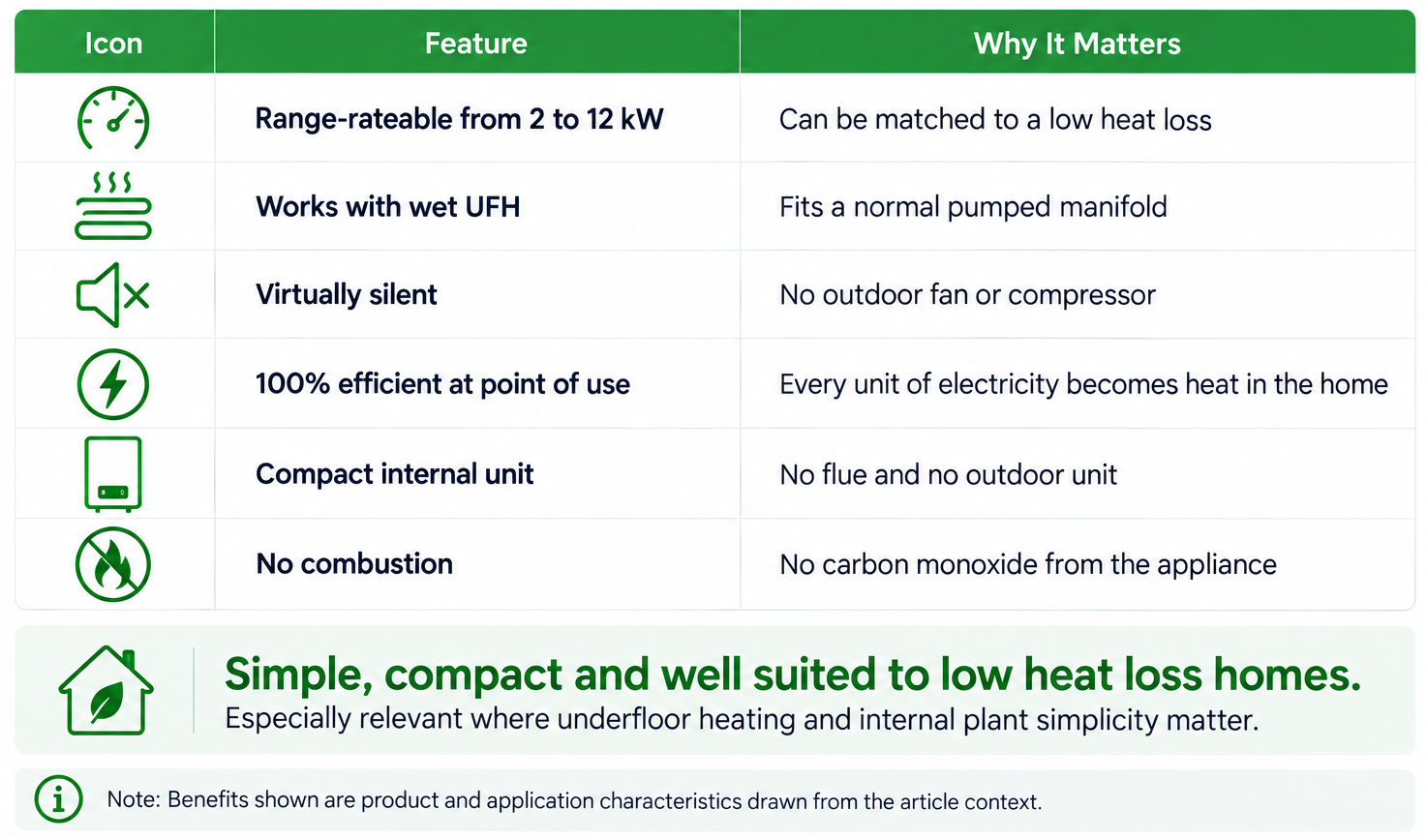
Most modern wet underfloor heating manifolds already have the pump, flow meters and zone controls. In other words, quite a lot of the clever plumbing is already sitting on the wall. The heat source simply needs to supply warm water at the right temperature.
Put a Time Period on the Payback
This is where the sales brochure normally becomes a little vague. A payback claim is not much use unless we say how long it takes and what happens during that time.
I have used 15 years rather than assuming every heat pump will run for 20 years without major spending. While some manufacturers state that ASHPs can last 20 years with good servicing, the maximum warranty period in this comparison is seven years.
Servicing and Parts After Year Seven
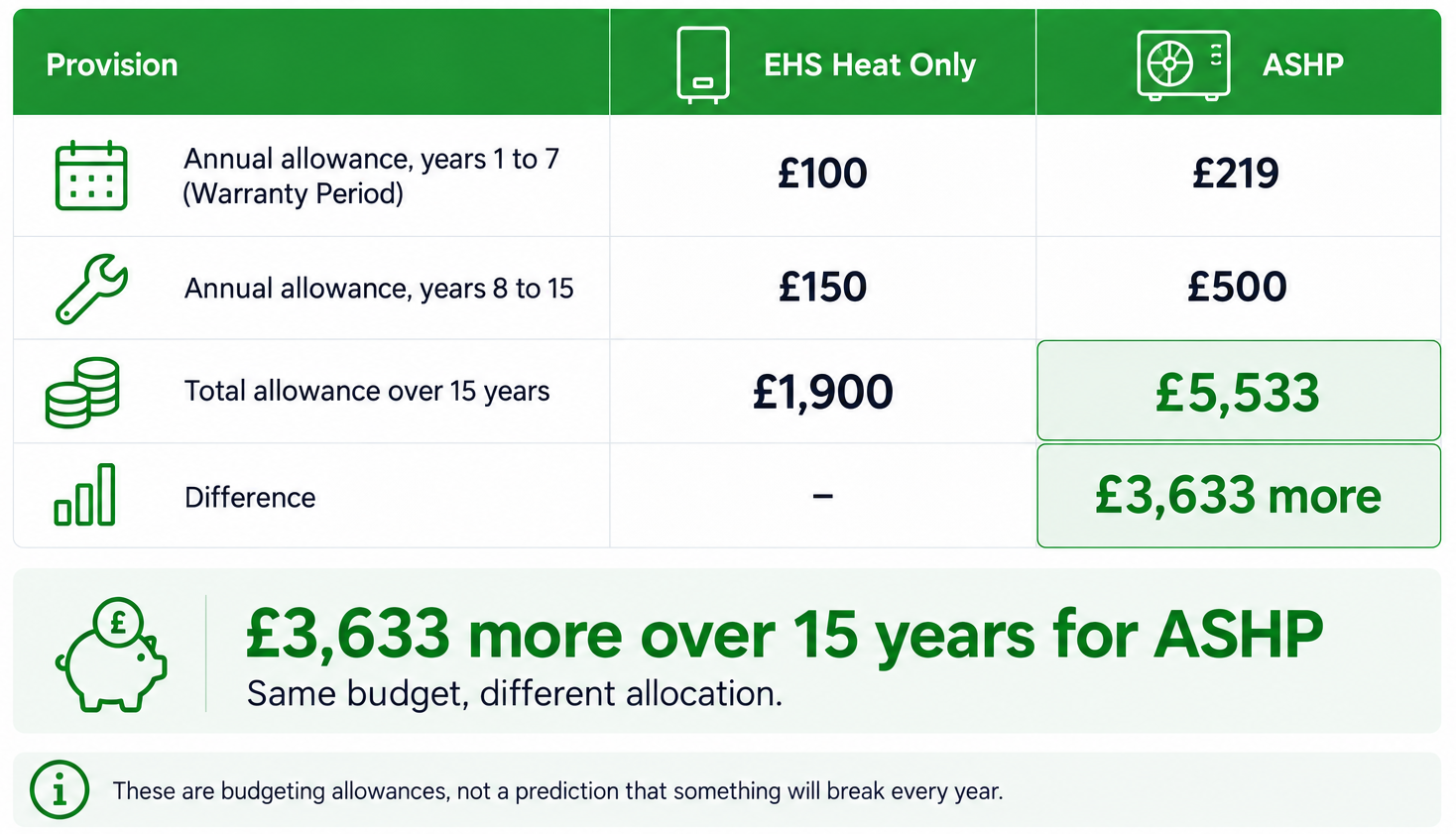
These are budgeting allowances, not a prediction that something will break every year. Unfortunately, repair bills do not arrive as a polite annual subscription. One year may cost nothing and the next may bring a compressor, fan, control board or refrigerant repair.
The Heat Only boiler is not maintenance free either, but it is a much simpler piece of kit. Over 15 years, that difference in complexity deserves a line in the calculation.
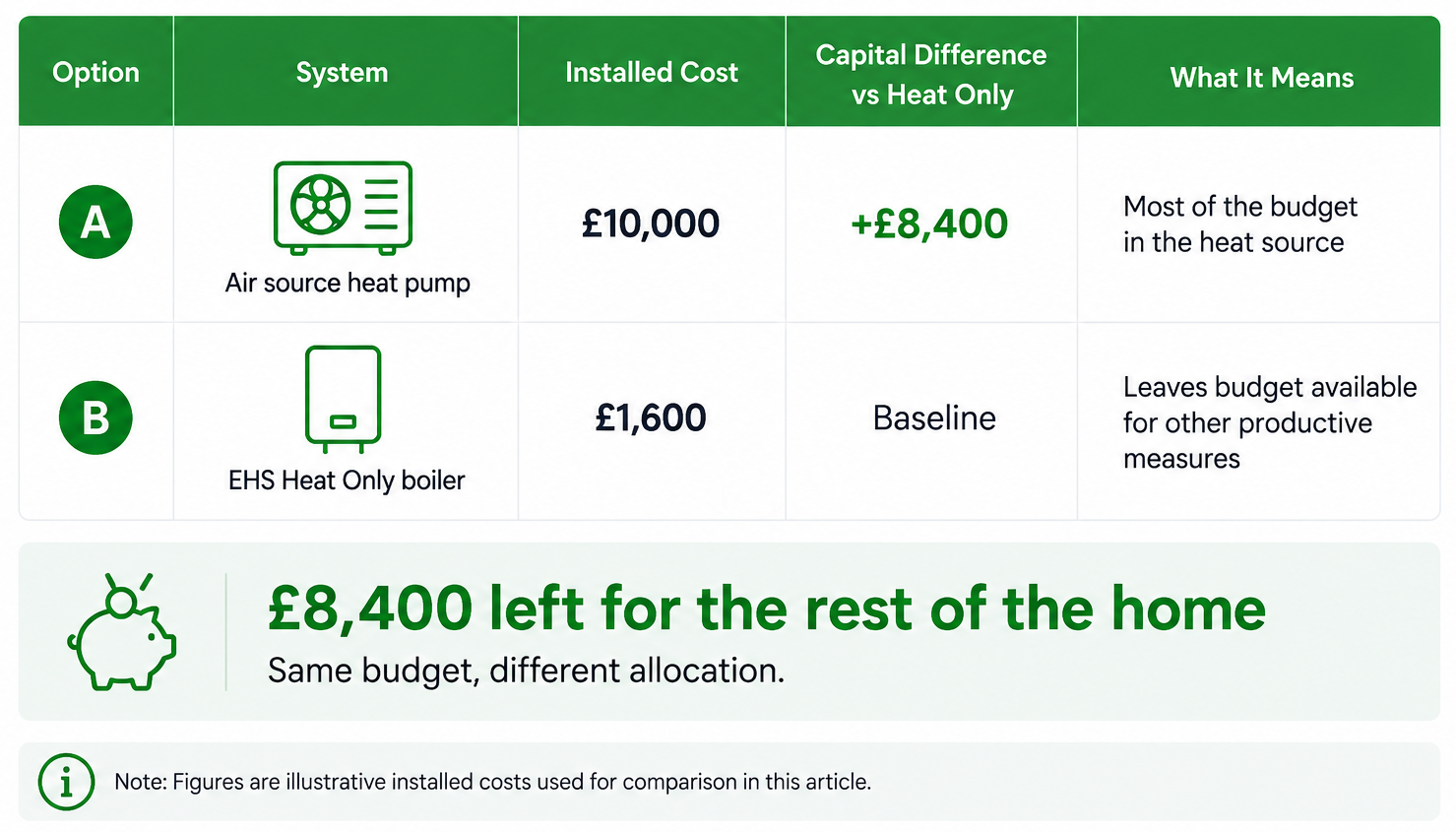
Use the £8,400 Somewhere Else
So what happens if we do not spend nearly everything on the star player?
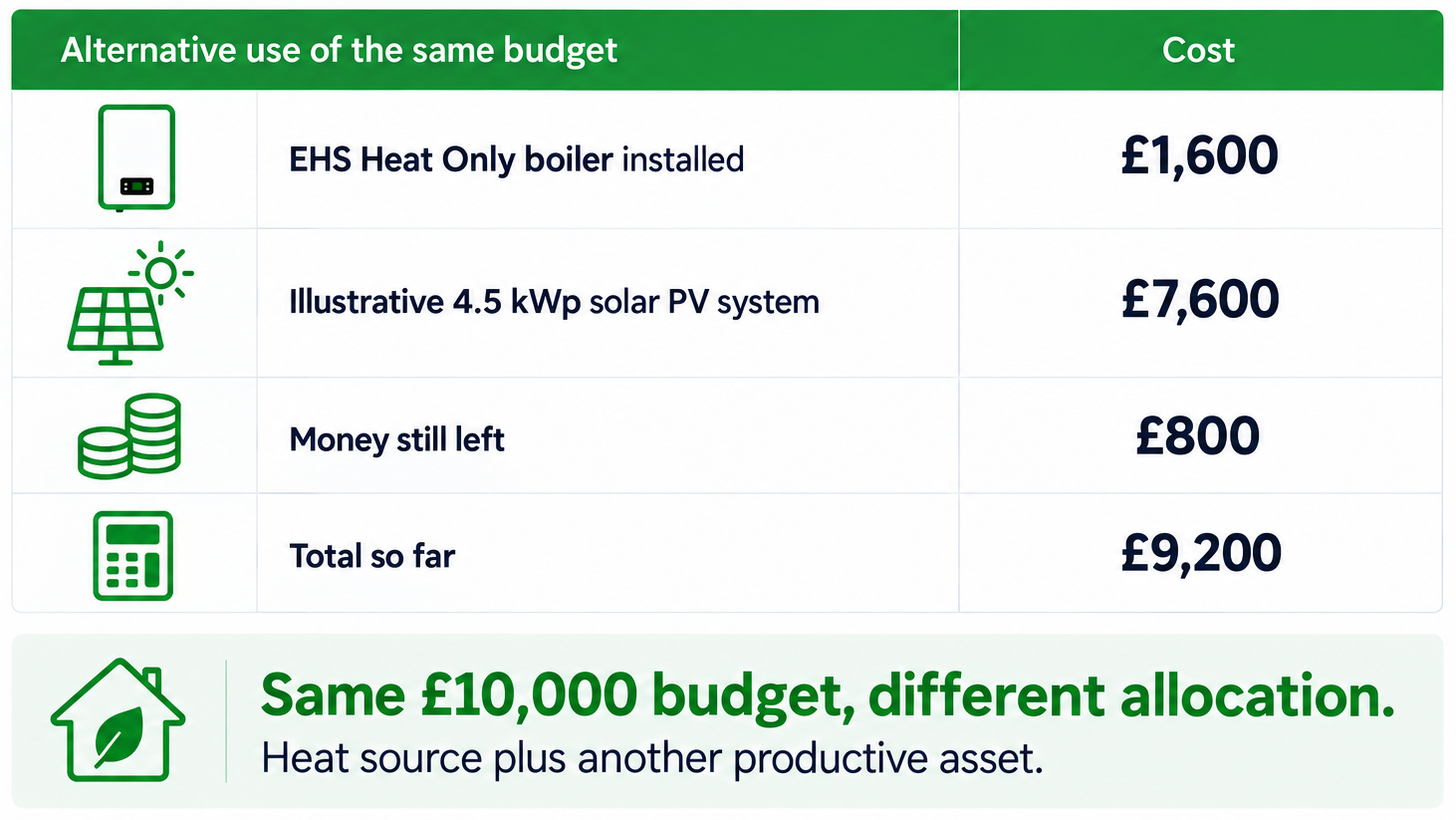
We still need a heat source, of course, so we could opt for the EHS Heat Only boiler and use the remaining money, around £8,400, to strengthen the rest of the home. One option is solar PV.
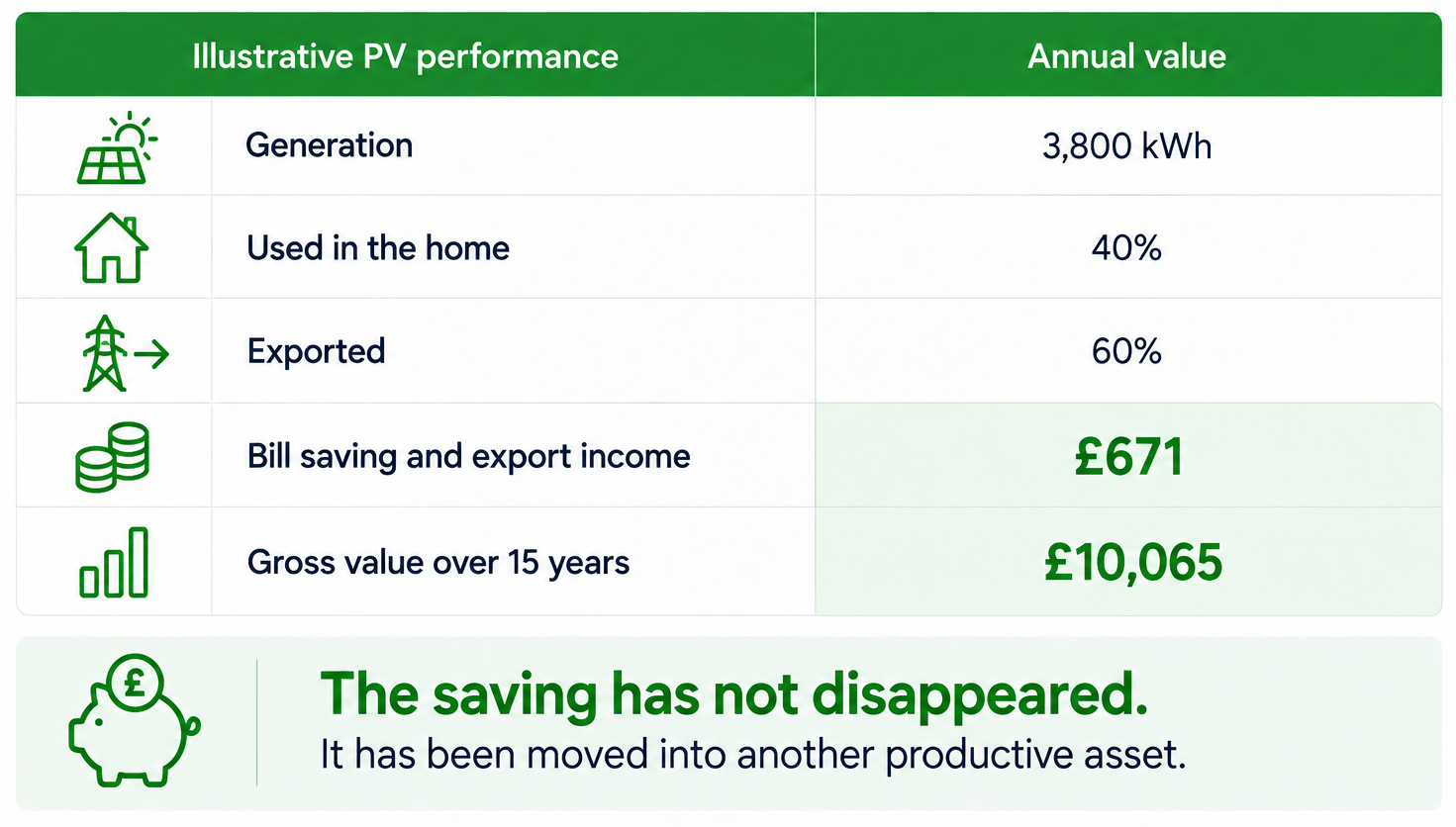
The panels will not provide free winter heating. January still has an awful habit of being a bit dark. But they work for the whole house: hot water, lighting, appliances, EV charging and export, as well as heating.
That is the point. The saving has not disappeared. It has been moved into another productive asset.
Can We Put the Remaining £800 to Work?
There is still £800 left, so let us put that to work as well.
A high-efficiency waste water heat recovery system (WWHRS), such as the Zypho Slim50, beneath the shower can take heat that would normally vanish down the drain and use it to preheat both the shower cold supply and the cylinder inlet. It is not magic; it is simply a heat exchanger with very good timing.
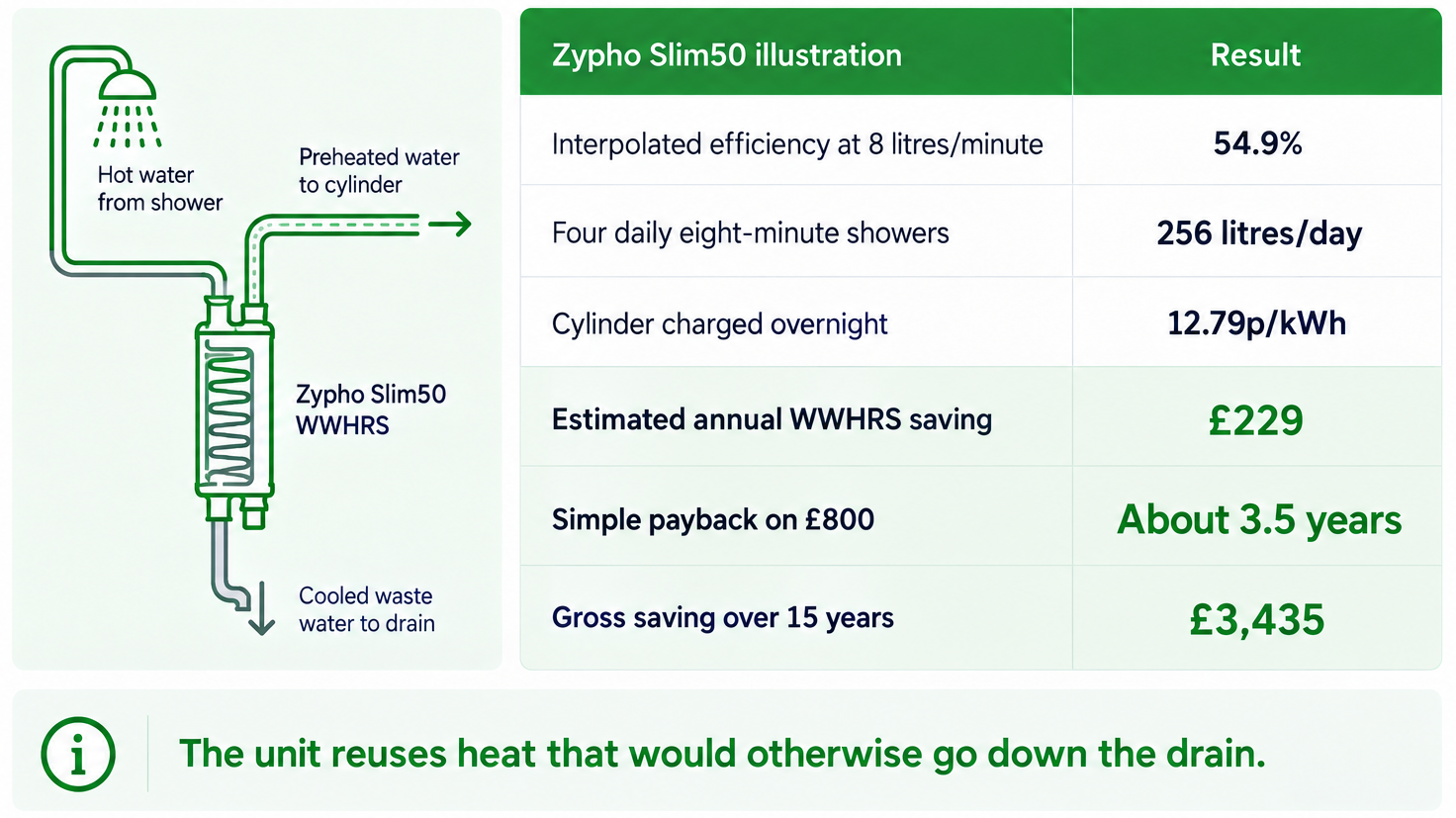
One £10,000 budget: either the ASHP, or Heat Only plus 4.5 kWp PV and high-efficiency WWHRS. The same budget, but a very different team sheet.
Does the WWHRS Mean a Smaller Cylinder as Well?
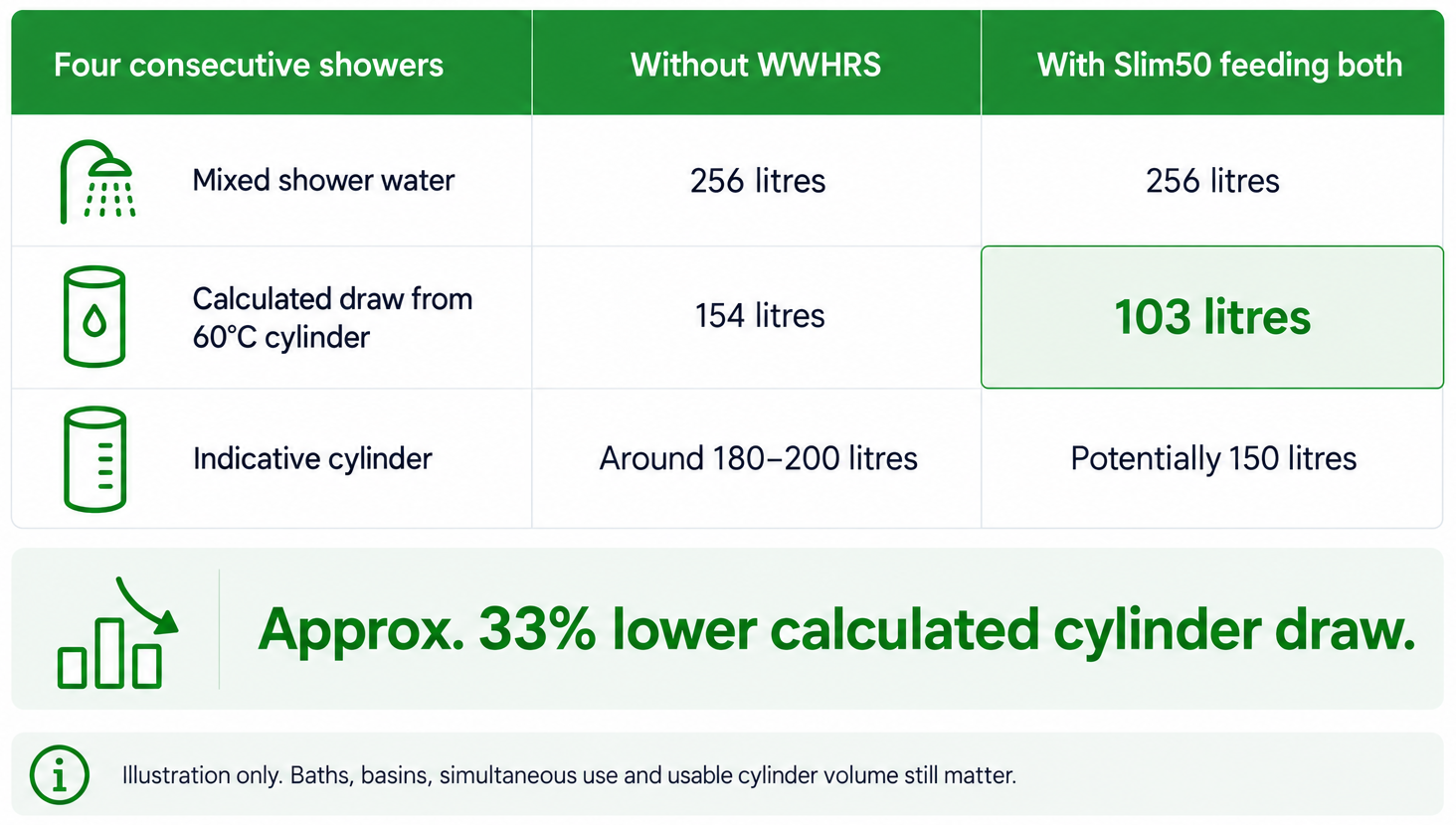
That is close to a 33% cut in the calculated peak shower draw. Suddenly the WWHRS is doing more than trimming the electricity bill: it may allow a smaller and cheaper cylinder, with lower standing losses and less plant space.
I would not choose a cylinder from this table alone. Baths, basins, simultaneous use and usable cylinder volume still matter. But for a shower-led four-person home, moving from around 180–200 litres to 150 litres becomes a perfectly sensible design conversation.
So at What House Heat Loss Do ASHPs Start to Pay Back?
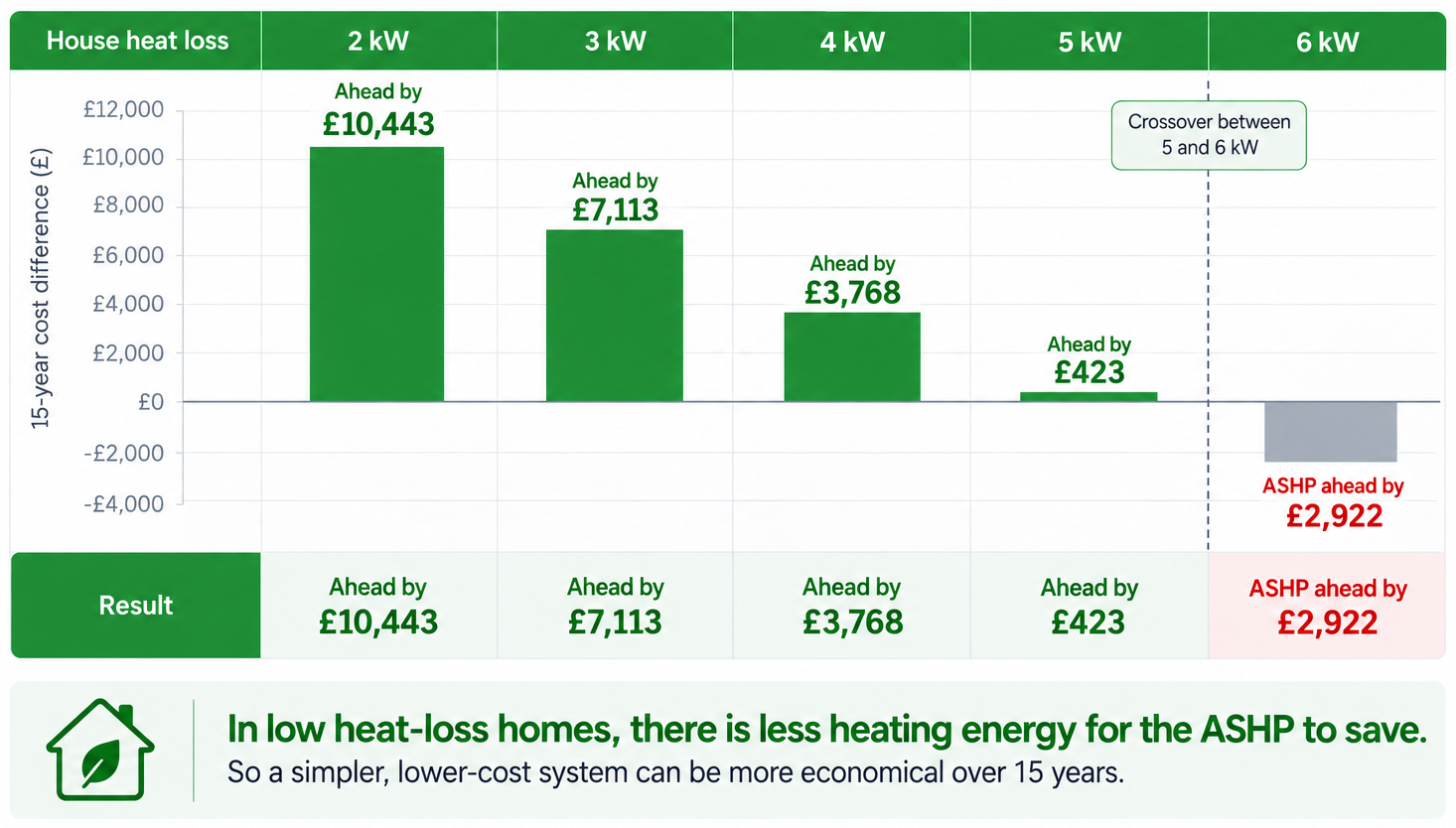
The crossover in this illustration sits between 5 and 6 kW.
That is the slightly awkward bit of maths: the better the building fabric becomes, the less heating energy there is for the ASHP to save.
At 6 kW, the heat pump has enough work to do and its efficiency wins. At 2, 3, 4 and 5 kW, this particular use of the same capital comes out ahead over 15 years.
SAP, Control, Noise and Space
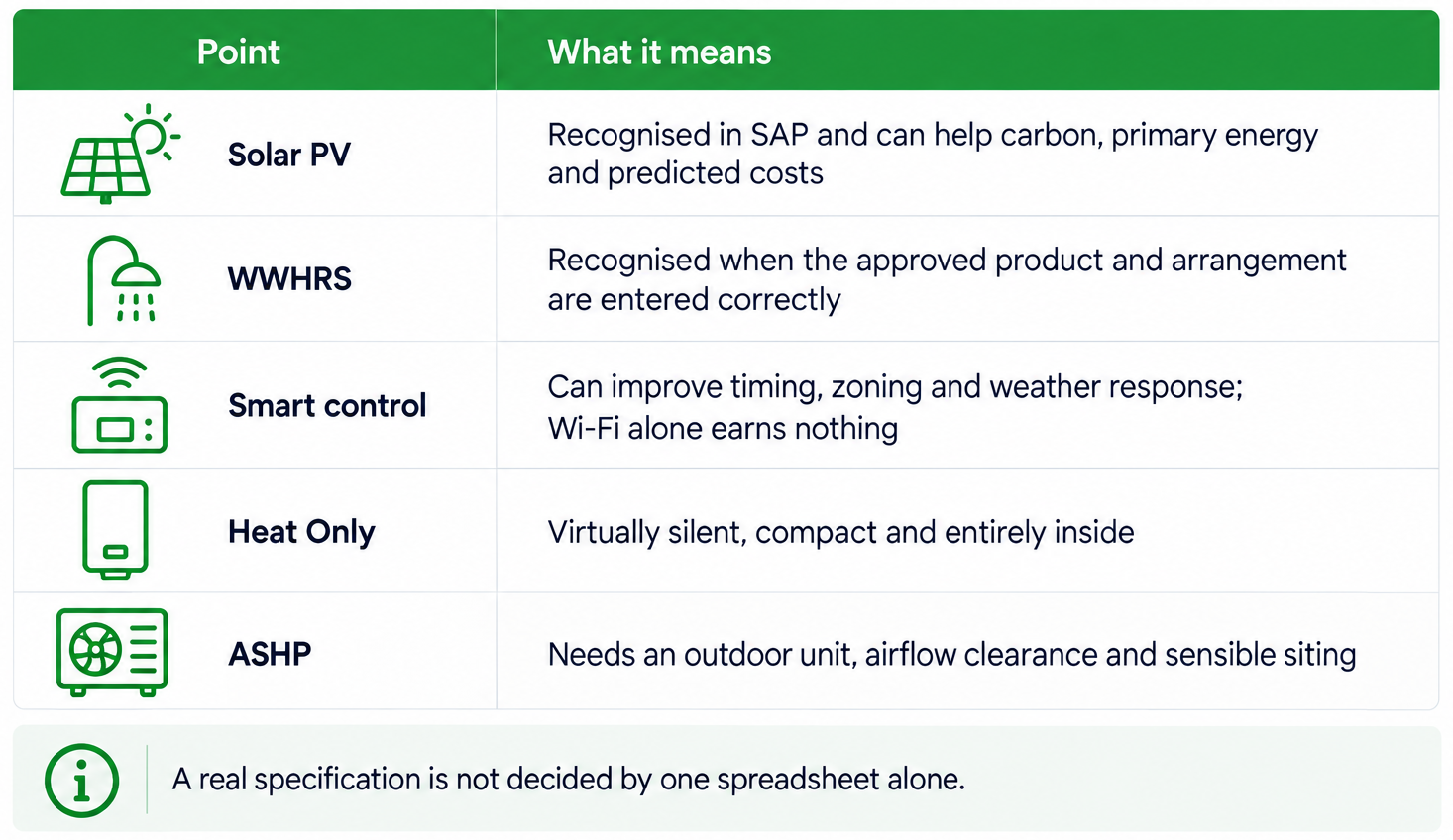
Of course, a real specification is not decided by one spreadsheet. SAP, controls, noise and the space available all have a say.
The Cost Does Not Stop at Year Fifteen
Eventually the first heat source has to come out and another one has to go in. This part rarely makes it into the payback headline, possibly because it spoils the headline.
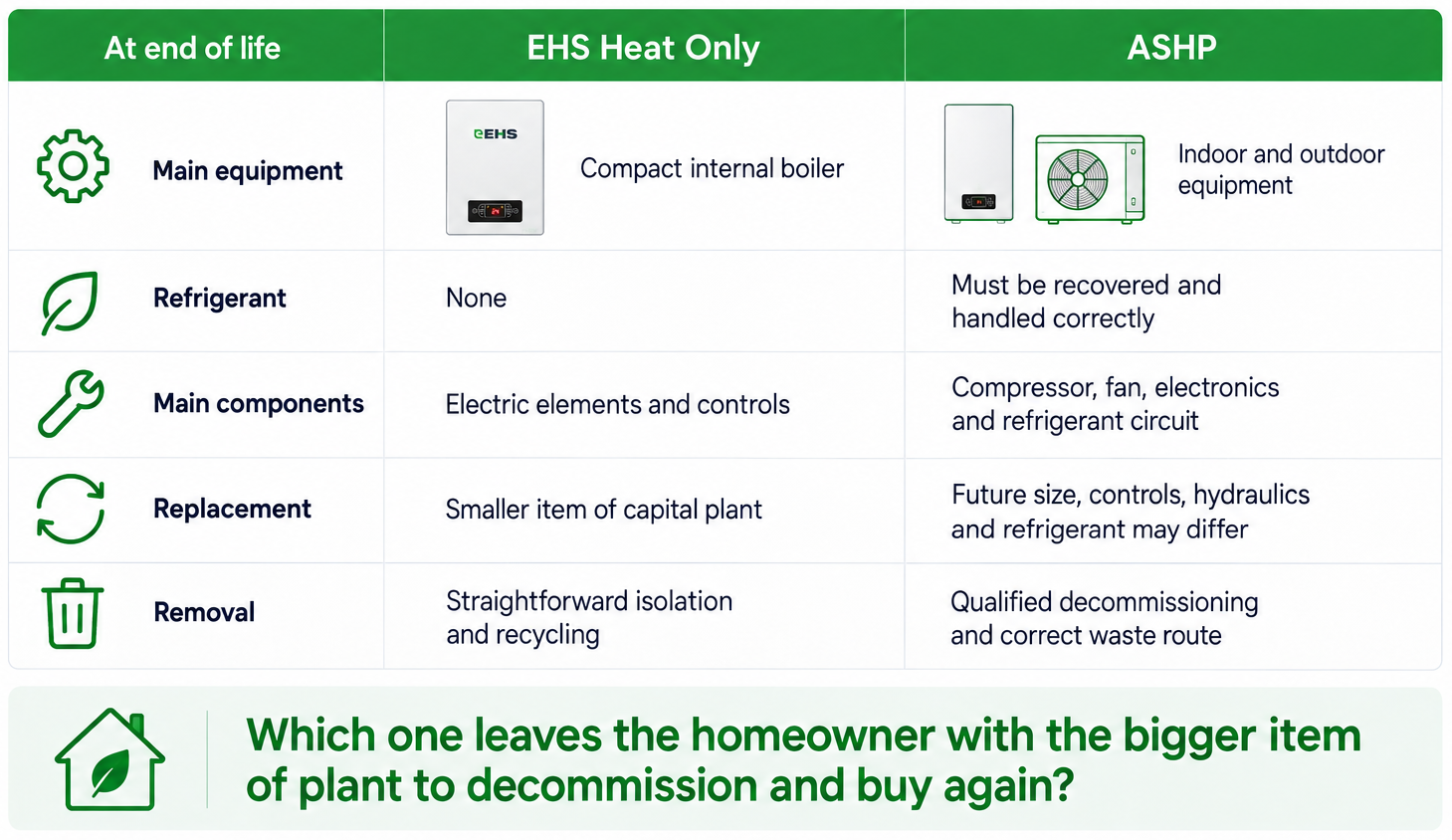
I have not added a made-up disposal or replacement saving to the figures. We do not know what either appliance will cost in 15 years. But it is fair to ask which one leaves the homeowner with the bigger item of plant to decommission, remove and buy again.
The Right Player for the Right Property
This is not an argument against heat pumps. In a higher-demand home, their efficiency can justify the extra cost and they may be exactly the right player. Low heat loss homes simply change the maths.
M&E consultants, SAP assessors, architects, engineers, developers, specifiers and installers should not just ask which appliance has the highest COP. The better question is which mix of measures gives the homeowner the best-performing home for the available budget, not just the best-looking figure on one appliance’s datasheet.
Sometimes the star signing is worth it. Sometimes the better result comes from strengthening the team.
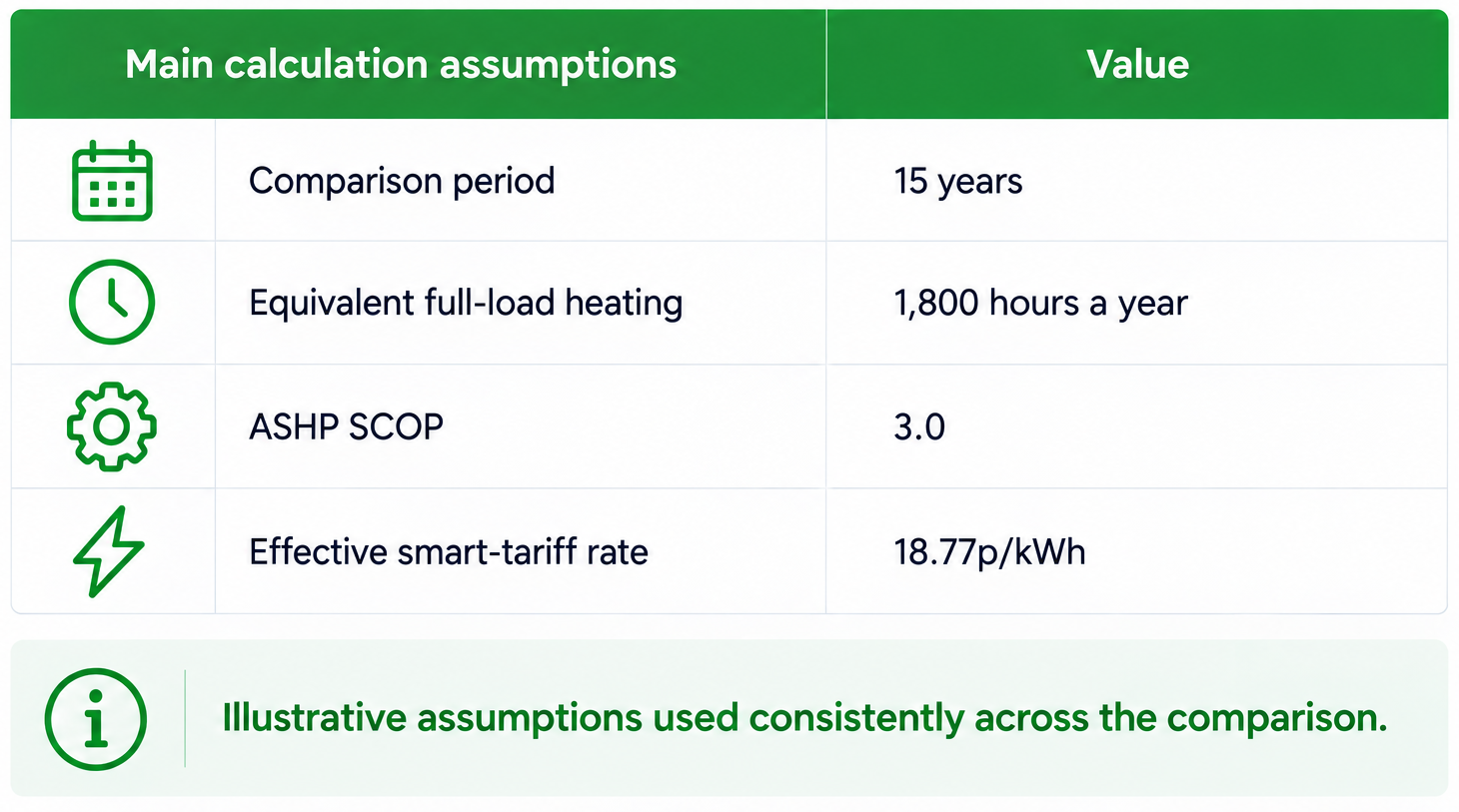
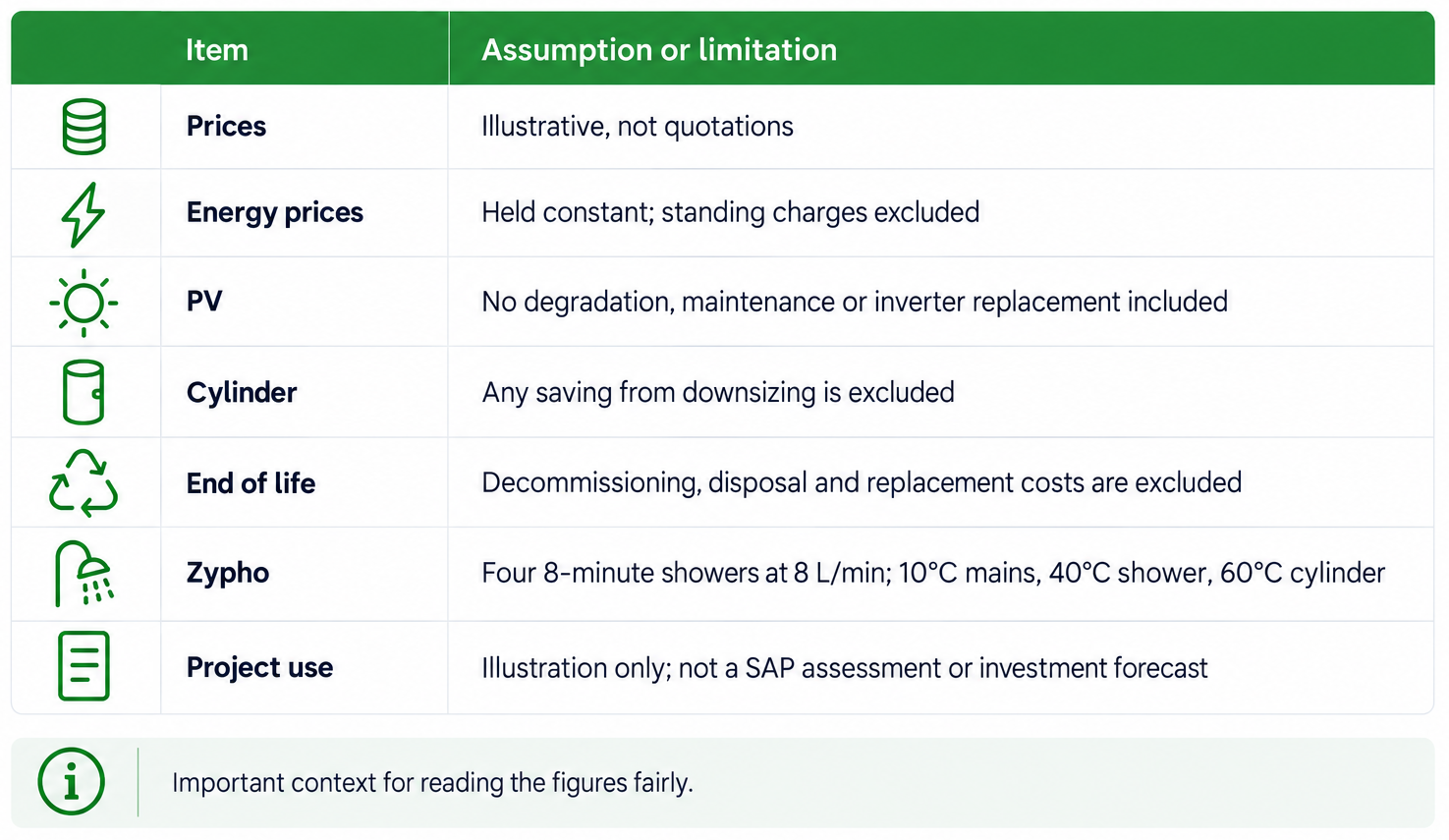
What the Figures Assume
Sources
- Energy Saving Trust – Solar panels
- Ofgem – Energy price cap
- Octopus Energy – Export tariffs
- BRE – SAP 10.3 specification
- Vaillant – Published heat pump servicing and cover prices
- PCDB – Zypho Slim DW50 System A performance
- GOV.UK – F-gas and waste electrical equipment guidance